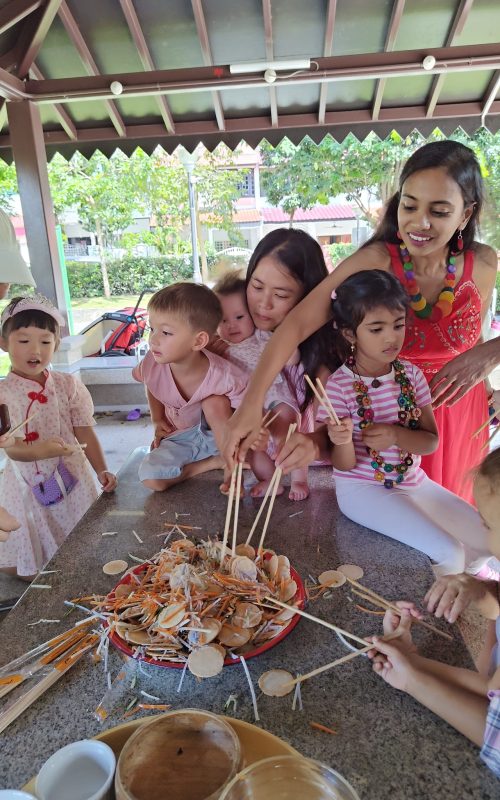
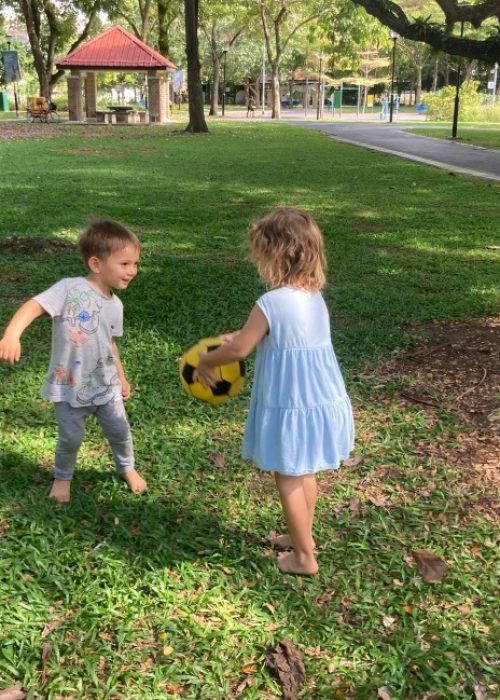
Waldorf education, founded by Rudolf Steiner in 1919, offers a holistic approach that nurtures the head, heart, and hands of each child through a blend of academic, artistic, and practical learning. This unique approach to education is deeply inspired by the philosophy of Rudolf Steiner—called anthroposophy.
With over 1,100 schools and nearly 2,000 kindergartens worldwide, Waldorf institutions emphasise imagination, community, and purposeful education. The aim is not only to impart knowledge but also to cultivate confident, creative, and compassionate individuals who are prepared for the complexities of modern life.
Research shows that Waldorf graduates are socially responsible and engage in lifelong learning, with over 90% accepted into their top-choice universities. In Singapore, our Waldorf community reflects this vision, deeply rooted in local culture and a spirit of shared growth.
Anthroposophy, developed by Austrian philosopher Rudolf Steiner, serves as the foundation of Waldorf education. It is not a religion, but a deeper understanding of humanity that encompasses the inner life of thoughts, emotions, and creativity, fostering holistic growth. Rooted in the Greek words for “human” (anthropos) and “wisdom” (sophia), anthroposophy views education, art, nature, and community as essential for physical, emotional, and spiritual development. It encourages educators to respect each child’s unique journey, shaping Waldorf learning environments, curriculum pacing, and adult engagement.
Anthroposophy also influences fields like biodynamic farming, integrative healthcare, and architecture, united by the belief that human growth thrives through connections with oneself, others, and the world.
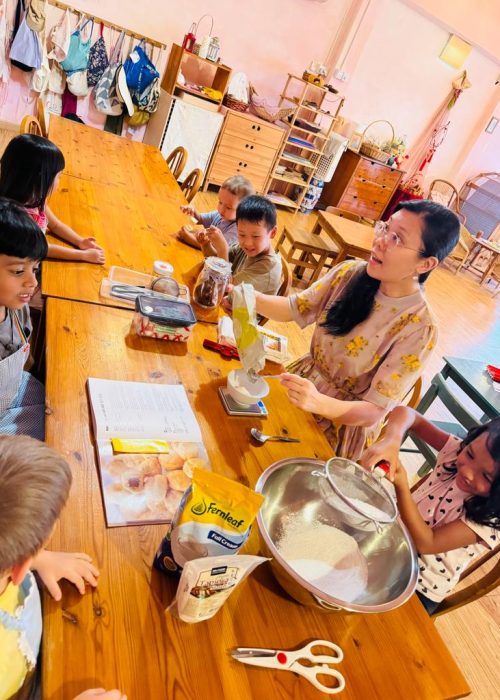
Waldorf education is grounded in these core principles:
Children’s thinking, feeling, and doing are nurtured together, helping them become well-rounded
individuals.
Gentle daily and seasonal rhythms provide security and space for curiosity to blossom.
Storytelling, the arts, and creative movement form the foundation of learning.
In Singapore’s fast-paced world, Waldorf classrooms protect childhood as a precious, unhurried season.
Studies find that this approach develops strong literacy and math skills, often matching or surpassing peers by middle school.
Waldorf teachers in Singapore act as gentle guides and role models, knowing that children learn deeply by observing caring adults. The team of teachers bond with the children, building trust and understanding unique to each child and family.
Waldorf teachers in Singapore act as gentle guides and role models, knowing that children learn deeply by observing caring adults. Teachers often stay with the same group for several years, building trust and understanding unique to each child and family.
Parents are welcomed as support partners: fostering a safe, close-knit, kampung-inspired community, participating in festivals, craft circles, and school life. This spirit of partnership helps every teacher, parent, and child feel seen, supported, and truly at home.
We honour the unique needs of each child at every stage of their development.
Parents, educators, and friends walk together, supporting one another with care.
We cultivate reverence for the wisdom within every human being.
Our way of life embraces the interconnection between the human being and the cosmos.
We nurture respect for people and the natural environment.
We work with like-minded partners while keeping anthroposophical ideals alive.
Waldorf students develop resilience, creativity, and a genuine love for learning. International research shows Waldorf graduates are motivated, socially responsible, and pursue lifelong learning; nearly all continue to higher education, with most accepted into one of their top-choice universities.
Parents consistently observe that their children are more confident, joyful, and able to adapt to new challenges, both academically and in life.
“Waldorf has given our daughter a sense of wonder and joy in learning that we haven’t seen anywhere else.” — Parent, Waldorf Singapore
Waldorf covers all core subjects — reading, writing, math, science — at developmentally appropriate stages. A strong academic foundation is built by first nurturing focus, imagination, and a desire to learn.
While screens are limited in early years to foster play and social development, older students are gradually introduced to digital tools in thoughtful, age-appropriate ways.
Waldorf is non-sectarian and welcomes families of all backgrounds. Its first school was founded as a free school open to every child, regardless of gender, religion, or background.
This philosophy supports the healthy growth of confident, compassionate, and creative individuals preparing them to thrive both in Singapore and the wider world. Learn and explore more:
Discuss Waldorf/Anthroposophy-related topics, events, & workshops together.
Discover our global network and affiliations.
Answers to common parent questions.
Stories from our families and educators.
WSEAS is a nonprofit, volunteer-led association that supports Waldorf/Steiner education and child development in Singapore. It is not a school but serves as a hub for community learning, parent education, and teacher training.
We run the WSEYC – Waldorf Steiner Early Years Centre programme, and we may collaborate with Waldorf-inspired schools or educational initiatives in Singapore and the region.
Anyone interested in Waldorf education and anthroposophy— including parents, teachers, early childhood professionals, or individuals exploring holistic education — is welcome to join.
Members receive:
You can join by submitting the membership form on our website and paying the annual fee. Membership is open throughout the year.
We offer:
Yes. Many events are open to the public, though members often receive discounted rates and priority access.
Some events — such as playgroups and festivals — are family-friendly, while others (e.g. study circles or teacher training) are for adults. Please check event descriptions for details.
No prior knowledge is required. Many members begin with curiosity or an interest in alternative approaches to education. We support learning at all stages.
Anthroposophy is the spiritual science developed by Rudolf Steiner. It forms the foundation of Waldorf education but is not taught as a belief system. Our focus is on how its principles inform child development, education, and personal growth.
Yes. We periodically host or support Waldorf early childhood training courses, foundational studies, and workshops, often in partnership with experienced regional or international trainers.
Depending on the course structure, some programmes are open to international or online participants. Details will be provided with each offering.
Yes. We welcome volunteers to support our festivals, events, marketing, administration, and more. It’s a wonderful way to contribute and connect with the community.
WSEAS is a not-for-profit organization funded by membership fees, donations, programme fees, and occasional grants or sponsorships.
Join our mailing list, follow us on social media, or visit our website’s event page regularly.
Waldorf education honours each child’s natural pace of development. In the early years, children learn best through play, movement, and hands-on exploration. By focusing on these foundations, children develop strong attention, language, social, and motor skills: key to future academic success.
Formal academics are introduced when children are truly ready, typically around age six or seven. Learn more about our approach here
Singapore experience: Many Waldorf children transition smoothly to Primary 1, often thriving academically and socially. Our graduates show that this foundation creates eager, confident learners, well prepared for local schools. See parent stories
Waldorf classrooms follow, predictable daily rhythms of circle time, outdoor play, creative arts, meals, and rest. Within this structure, children enjoy purposeful play, guided by clear expectations and loving boundaries.
Teachers gently foster social skills, cooperation, and respect. This approach blends the best of routine and creativity, building both confidence and self-regulation.
A screen-free environment in early childhood supports imagination, language, movement, and face-to-face social skills, crucial for later academic and digital learning.
As children grow, they are introduced to technology in thoughtful, age-appropriate ways. Waldorf graduates adapt well to digital tools because they’ve built a strong foundation of focus, creativity, and problem-solving. See our philosophy on unhurried childhood and technology.
Waldorf children in Singapore typically adjust well to Primary 1, entering with strong self-confidence, social skills, and a love of learning.
The focus on play, resilience, communication, and holistic development helps them adapt quickly to new routines and expectations. Many parents report their children thrive and stand out for their curiosity and adaptability.
While both Waldorf and Montessori respect each child’s development, Waldorf education emphasises imagination, creativity, and rhythm.
Learning is rooted in storytelling, artistic experiences, and a connection to nature. Montessori classrooms use self-directed work with specific materials and emphasise independence. Waldorf focuses more on creative play, community, and holistic growth. Learn more about Waldorf’s unique philosophy.
Yes. The Waldorf Steiner Early Years Centre is fully licensed by Singapore’s ECDA, and all teachers are professionally certified and trained in Waldorf pedagogy.
The Centre is also formally recognised by Freunde der Erziehungskunst Rudolf Steiners e.V. , linking us to the worldwide Waldorf network and upholding international standards.
Waldorf education honours each child’s natural pace of development. In the early years, children learn best through play, movement, and hands-on exploration. By focusing on these foundations, children develop strong attention, language, social, and motor skills: key to future academic success.
Formal academics are introduced when children are truly ready, typically around age six or seven. Learn more about our approach here
Singapore experience: Many Waldorf children transition smoothly to Primary 1, often thriving academically and socially. Our graduates show that this foundation creates eager, confident learners, well prepared for local schools. See parent stories
Waldorf classrooms follow, predictable daily rhythms of circle time, outdoor play, creative arts, meals, and rest. Within this structure, children enjoy purposeful play, guided by clear expectations and loving boundaries.
Teachers gently foster social skills, cooperation, and respect. This approach blends the best of routine and creativity, building both confidence and self-regulation.
A screen-free environment in early childhood supports imagination, language, movement, and face-to-face social skills, crucial for later academic and digital learning.
As children grow, they are introduced to technology in thoughtful, age-appropriate ways. Waldorf graduates adapt well to digital tools because they’ve built a strong foundation of focus, creativity, and problem-solving. See our philosophy on unhurried childhood and technology.
Waldorf children in Singapore typically adjust well to Primary 1, entering with strong self-confidence, social skills, and a love of learning.
The focus on play, resilience, communication, and holistic development helps them adapt quickly to new routines and expectations. Many parents report their children thrive and stand out for their curiosity and adaptability.
While both Waldorf and Montessori respect each child’s development, Waldorf education emphasises imagination, creativity, and rhythm.
Learning is rooted in storytelling, artistic experiences, and a connection to nature. Montessori classrooms use self-directed work with specific materials and emphasise independence. Waldorf focuses more on creative play, community, and holistic growth. Learn more about Waldorf’s unique philosophy.
Yes. The Waldorf Steiner Early Years Centre is fully licensed by Singapore’s ECDA, and all teachers are professionally certified and trained in Waldorf pedagogy.
The Centre is also formally recognised by Freunde der Erziehungskunst Rudolf Steiners e.V. , linking us to the worldwide Waldorf network and upholding international standards.
The Waldorf Steiner Education Association Singapore, founded in 2003, is a non-profit supporting Waldorf education locally through the Early Years Learning Centre, workshops, events, and community outreach.